


Frost, Heat, Rain, or Wind: What Is Most Dangerous for a Fresh Facade?
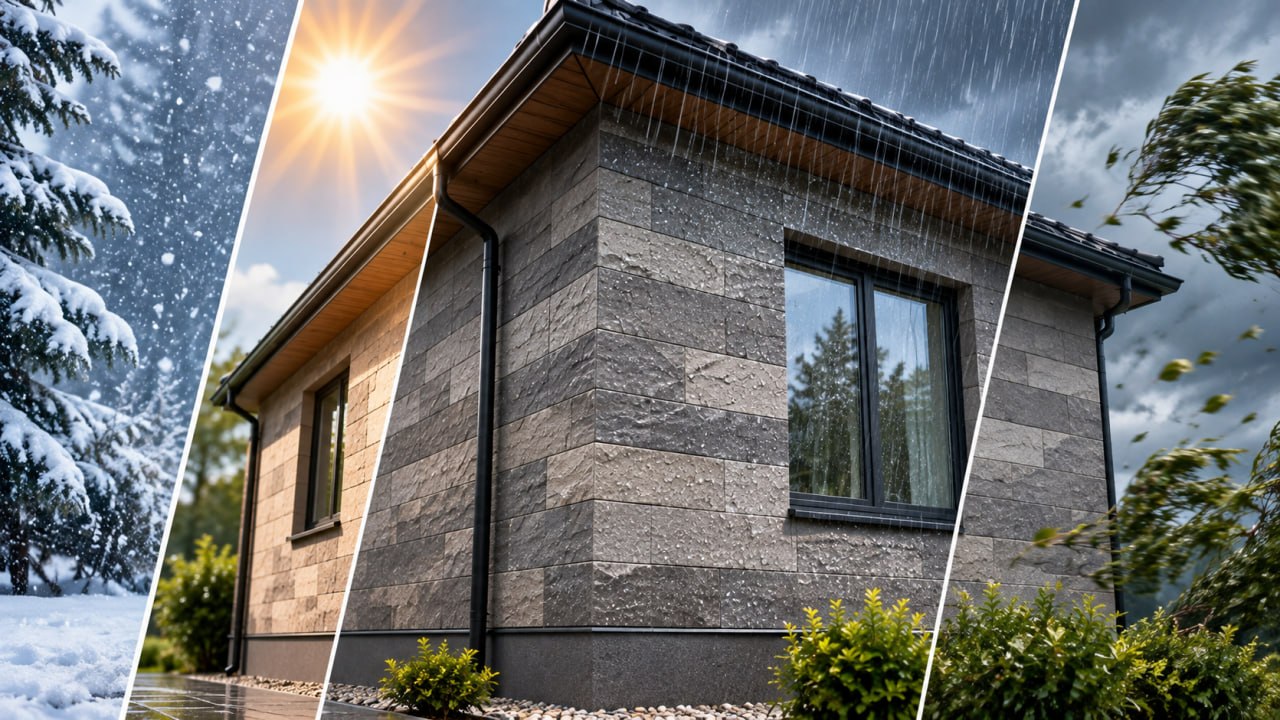
The facade looks finished, but the adhesive and reinforcement compounds are still gaining strength, and the weather in those days decides whether the cladding will hold. We explain how frost disrupts curing, why heat and wind dry adhesive too fast, what rain does right after installation, what the KORDEKO instructions expressly forbid, and how to plan the work for the whole curing period.
After facade cladding is installed, the surface may look finished, but adhesive and reinforcement compounds are still continuing to gain strength. During this period, weather conditions can significantly affect installation quality.
Frost, heat, rain, and strong wind affect fresh facade finishes in different ways. Some interfere with adhesive curing, while others accelerate drying or cause unwanted moisture exposure. To reduce the risk of delamination and cracking, weather conditions should be considered not only during installation, but also afterward.
Why Is Frost Especially Dangerous for Fresh Cladding?
Low temperatures are a serious risk for adhesive compounds that have not yet reached the required strength.
If the water in fresh mortar freezes, the formation of the adhesive bond can be disrupted. As a result, the tile may lose adhesion to the substrate even if it appeared to be firmly bonded immediately after installation.
Conditions are especially risky when daytime temperatures are above freezing but fall below 0 °C at night.
KORDEKO installation instructions clearly state that tile installation should not be carried out in freezing conditions. The frost resistance of the finished tile does not mean that it can be installed at sub-zero temperatures.
The adhesive manufacturer’s temperature limits must be respected throughout the entire specified curing period.
Why Can Heat Be Dangerous for Facade Tile?
In hot weather, adhesive can lose moisture too quickly, especially when work is carried out in direct sunlight.
Rapid drying is not the same as correct curing. If the mixture loses the moisture it needs too early, the reliability of the bond may be reduced.
To help prevent this, the working surface should be protected from direct sunlight, for example with facade protection mesh.
KORDEKO installation instructions also allow the substrate to be dampened in hot weather where necessary to prevent the adhesive from drying too quickly. However, the requirements of the specific adhesive manufacturer should always be followed.
What Happens If It Rains Immediately After Installation?
Finished facade cladding is designed to withstand atmospheric precipitation. Fresh construction compounds, however, may still be sensitive to water exposure.
Rain can wet unfinished adhesive and reinforcement layers, and water may enter the facade structure through poorly executed junctions.
Particular attention should be paid to areas around windows, window sills, roofs, and the plinth.
If rain is forecast, the working area should be protected in advance. Whether a specific material can be exposed to rain depends on its curing stage and the manufacturer’s instructions.
Why Can Strong Wind Also Damage the Finish?
Wind is not always seen as a major facade risk, but it accelerates moisture evaporation from construction compounds.
The combination of strong wind, high temperatures, and direct sunlight is particularly unfavorable.
Under these conditions, the adhesive may dry too quickly, which can negatively affect the formation of a reliable bond.
Strong wind also makes working on scaffolding more difficult and increases installation safety requirements.
For this reason, guidance for insulated facade systems generally recommends avoiding installation during strong winds.
Which Weather Condition Is Most Dangerous for KORDEKO Flexible Tile?
KORDEKO Flexible Tile (PletaFlex) is produced on a mineral-polymer base and is intended for exterior cladding. The finished material is resistant to moisture, temperature fluctuations, and repeated freeze-thaw cycles.
However, the performance of the finished tile must be distinguished from the conditions required during installation.
For fresh cladding, the main risks are:
- Frost — can interfere with adhesive curing and damage the bond.
- Heat — can cause the adhesive to dry too quickly.
- Rain — can introduce unwanted moisture into fresh construction layers.
- Strong wind — can accelerate moisture loss and make installation more difficult.
Frost is particularly dangerous for fresh cement-based compounds, which is why installation at sub-zero temperatures is specifically prohibited by KORDEKO instructions.
However, there is no universal ranking for every project. The actual consequences depend on the adhesive being used, substrate condition, and the duration of exposure to the weather.
How Can a Fresh Facade Be Protected?
Proper planning can prevent most weather-related installation problems.
Before starting work, it is important to:
- Check the weather forecast, including nighttime temperatures.
- Follow the adhesive manufacturer’s temperature requirements.
- Protect fresh surfaces from direct sunlight and precipitation.
- Avoid installation during strong winds.
- Allow the required curing time before moving on to the next stage.
If Facade Insulation is being installed, weather restrictions should be considered at every stage: installation of insulation, reinforcement, priming, and final cladding.
The general requirements for external thermal insulation composite systems (ETICS) are set out in the European assessment documents published by EOTA.
Even high-quality finishing tile cannot compensate for mistakes made in the underlying layers.
See also: can flexible tile be installed in a heatwave; heat, frost and temperature swings on a facade; what happens to an insulated facade when water gets in.
Conclusion
All four weather factors can be dangerous for a fresh facade, but for different reasons. Frost can interfere with adhesive curing, heat and wind accelerate moisture loss, while rain can create unwanted moisture exposure.
KORDEKO Flexible Tile is designed for use in variable climatic conditions, but reliable adhesion depends on correct installation.
Facade work should therefore be planned according to the weather throughout the full curing period of the construction compounds, not only on the day the tile is installed. Choosing the right installation conditions helps reduce the risk of future delamination and costly repairs.
Frequently asked questions
Can KORDEKO flexible tile be installed in frost?
What should be done when installing in hot weather?
Is rain dangerous right after installation?
Need advice on your facade?
- Get a free consultation for your project
- Find out which material suits your facade
- We'll answer all your questions and help you choose