


How Facade Texture Changes the Appearance of a House: Stone, Slate, Brick, or Wood?
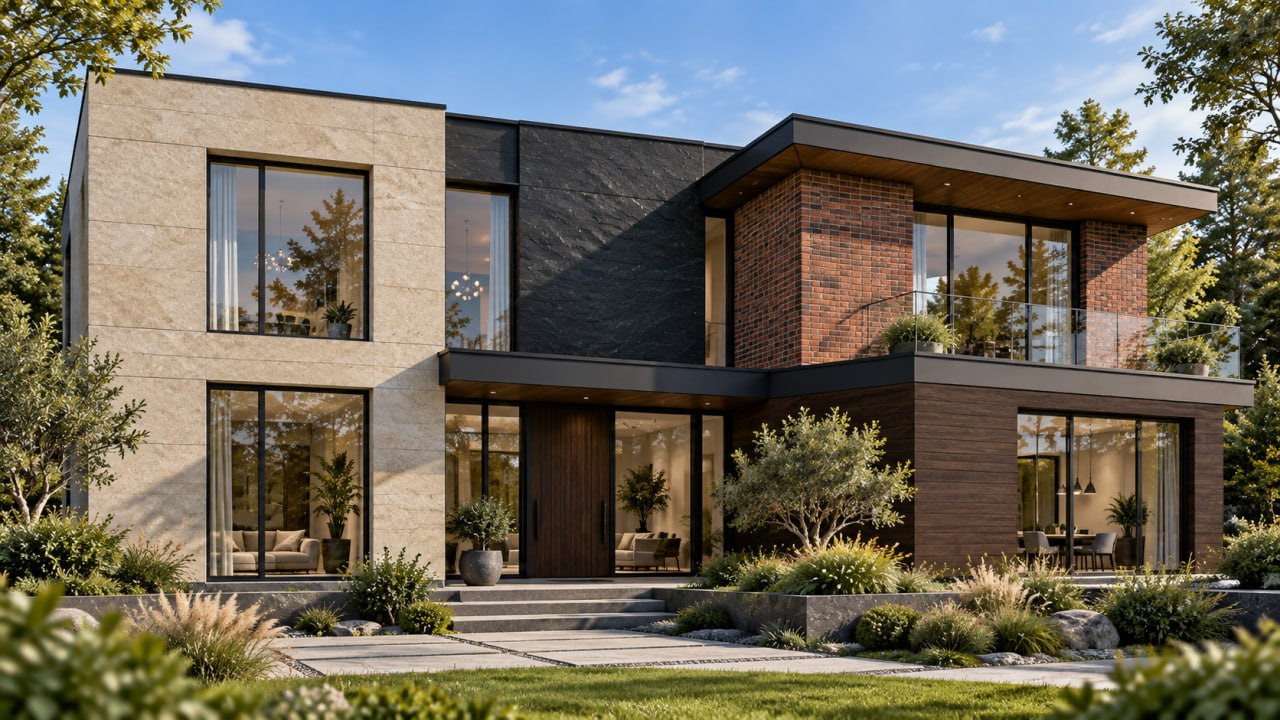
Two houses with identical architecture look different because of one detail: the texture of the cladding. We explain how relief, element size and light change the way a building is perceived, what stone, slate, brick and wood each bring, how KORDEKO flexible tile reproduces these textures and how many textures one facade can carry.
Two houses with identical architecture can look completely different because of one detail—the texture of the facade cladding. A smooth surface makes a building appear calmer, textured stone adds visual weight, brickwork emphasizes geometry, while a wood texture creates a warmer and more welcoming impression.
That is why choosing a facade is not only about color. Texture influences how the size of the building, its architectural lines, and its overall style are perceived.
Why Texture Influences the Perception of Architecture
The surface of a cladding material interacts with light. Projections create shadows, recessed areas emphasize relief, and the direction of the pattern affects the visual proportions of the walls.
For example, a horizontal layout can make a building appear wider, while vertical elements can emphasize its height.
Three main factors influence how a facade is perceived:
- Relief depth. A pronounced texture makes walls appear more three-dimensional.
- Element size. Large formats create a calmer surface, while smaller elements add more detail.
- Color and lighting. The same texture can look different in sunlight and in shade.
That is why the right material should be selected according to the architecture of the house, not only from a small sample.
Stone, Slate, Brick, or Wood: Which Texture Should You Choose?
Natural Stone — Expressiveness and Solidity
A textured stone surface emphasizes the volume of the building. It works especially well on plinths, entrance areas, and individual architectural elements.
Light shades create a more visually lightweight appearance, while darker tones add contrast and make the facade feel more substantial.
Slate — Strong Geometry and Contemporary Style
The layered texture of slate creates characteristic lines and variations in relief.
This type of cladding works well on minimalist facades where the goal is to emphasize the geometry of the building without adding too many decorative elements.
Brick — Rhythm and Architectural Character
Brick texture creates an organized visual pattern through repeating elements and joints.
It can be used on both traditional homes and contemporary buildings with an industrial architectural style.
Wood — Natural Character and Visual Warmth
Wood texture softens strict architectural forms and combines well with stone surfaces.
It is often used for accent walls, entrance areas, terraces, and contemporary private homes.
How KORDEKO Flexible Tile Creates Different Textures
KORDEKO Flexible Tile (PletaFlex) is produced on a mineral-polymer base. Thanks to the technology used to form the surface relief, it can reproduce the appearance of various natural materials.
The range includes textures inspired by:
- natural irregular stone;
- slate;
- brick;
- wood;
- marble;
- bush-hammered stone.
Flexible tile can be installed not only on flat walls, but also on columns, arches, and rounded corners. This makes it possible to maintain a consistent decorative appearance across complex architectural elements.
The material is also significantly lighter than traditional heavy stone cladding.
Can Several Textures Be Combined on One Facade?
Combining textures can help highlight different parts of a building.
For example, a stone texture can be used on the plinth, a wood texture around the entrance, and a calmer slate finish on the main walls.
However, too many different textures can make the architecture look overloaded. In most cases, it is better to choose one main texture and use a second one for accents.
If Facade Insulation is planned, the decorative finish should also be selected according to the compatibility of the entire thermal insulation system. KORDEKO Flexible Tile can be used as the final finish over a properly prepared insulated facade.
The general requirements for external thermal insulation composite systems (ETICS) are set out in the European assessment documents published by EOTA.
See also: how to combine stone, brick, slate and wood on a facade; large or small tile format: how size changes perception; a facade that will not look dated in 5–10 years.
Conclusion
Facade texture affects the appearance of a building just as much as color or roof shape. Stone emphasizes solidity, slate highlights geometry, brick creates rhythm, and wood texture softens the overall appearance of the house.
KORDEKO Flexible Tile makes it possible to achieve these decorative effects without cladding the building with heavy natural materials.
The key is to choose the texture according to the architecture, proportions, and lighting conditions of the building. This helps create a facade that looks cohesive rather than like a random combination of different finishes.
Frequently asked questions
Which facade texture makes a house look bigger?
How many textures can be combined on one facade?
Which textures does KORDEKO flexible tile come in?
Need advice on your facade?
- Get a free consultation for your project
- Find out which material suits your facade
- We'll answer all your questions and help you choose